
Direct Screen Printing on Glass: Ink Adhesion, Cure, and Durability Explained
When winery brand managers and packaging directors ask about direct screen printing on glass, they usually start with how it looks. Then the practical questions come up: How does the ink stay on the bottle? Will it hold up in the cellar? What happens when bottles are handled, chilled, or shipped across the country?
Those are the right questions. The answers come down to materials, heat, and how the process is handled from start to finish. That combination is what sets glass screen printing apart from traditional labels.
What Direct Screen Printing on Glass Really Means
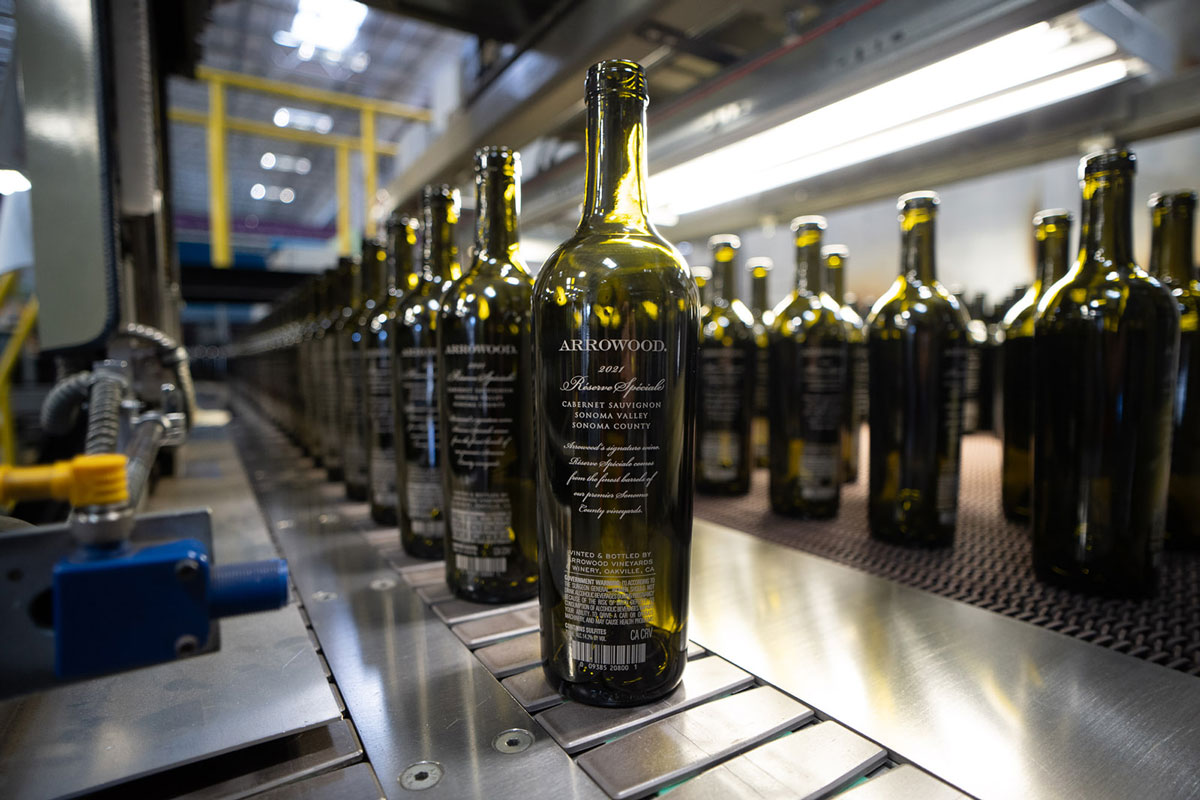
Direct screen printing on glass, often called Applied Color Labeling (ACL), means the design is printed straight onto the bottle instead of onto a label that gets applied later. The bottle itself becomes the surface for the design, with each color or metal layer printed directly onto it.
That difference shows up pretty quickly in real use. Because the design is part of the bottle, it avoids a lot of the issues that come with labels on curved, cold, or damp glass. After firing, the decoration and the bottle are essentially one piece.
At Bergin, this is a process we’ve been working on for over twenty years at our Napa Valley facility. We partner with wineries, spirits producers, and specialty food brands across the West Coast that want packaging to look clean and hold up over time.
How Ceramic Ink Adheres to Glass
Glass doesn’t absorb ink. It’s non-porous, so the ink has to bond in a different way.
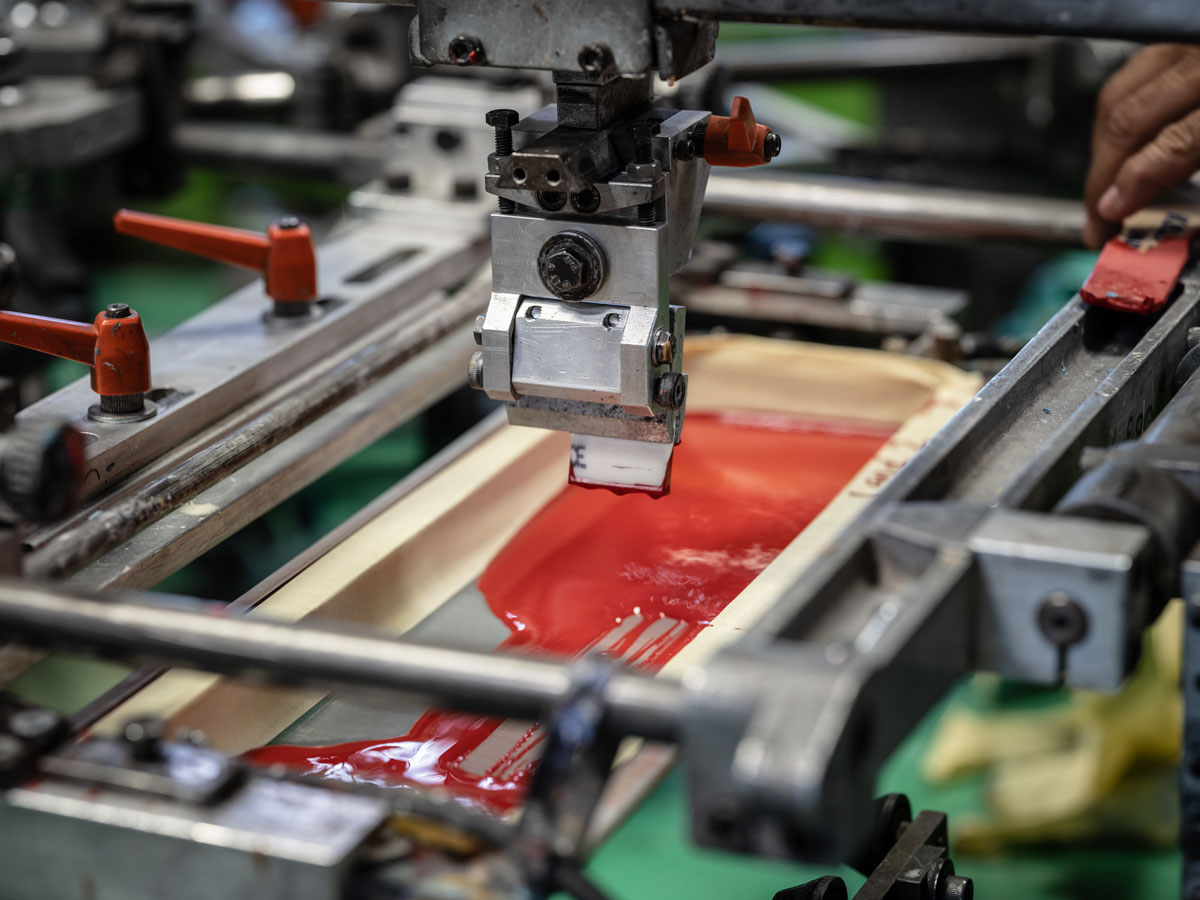
Our Italian machines apply ceramic paint directly onto the bottle. These inks are made specifically for glass and include materials that react under heat. Instead of sitting on the surface, they bond with the glass itself during firing. What you get is a fused layer, not something that can peel off.
That’s why the type of ink matters. Different inks behave differently on glass, and not every process creates the same level of durability. Ceramic inks are a big part of what makes this method hold up over time.
Bergin can print up to seven colors, including custom blends, along with precious metals like copper, gold, and platinum. Each color is applied in its own pass, with a tight registration so the final design looks sharp from every angle.
The Cure Process: Why Lehr Firing Matters
Printing is only half the story. The real bond happens during firing.
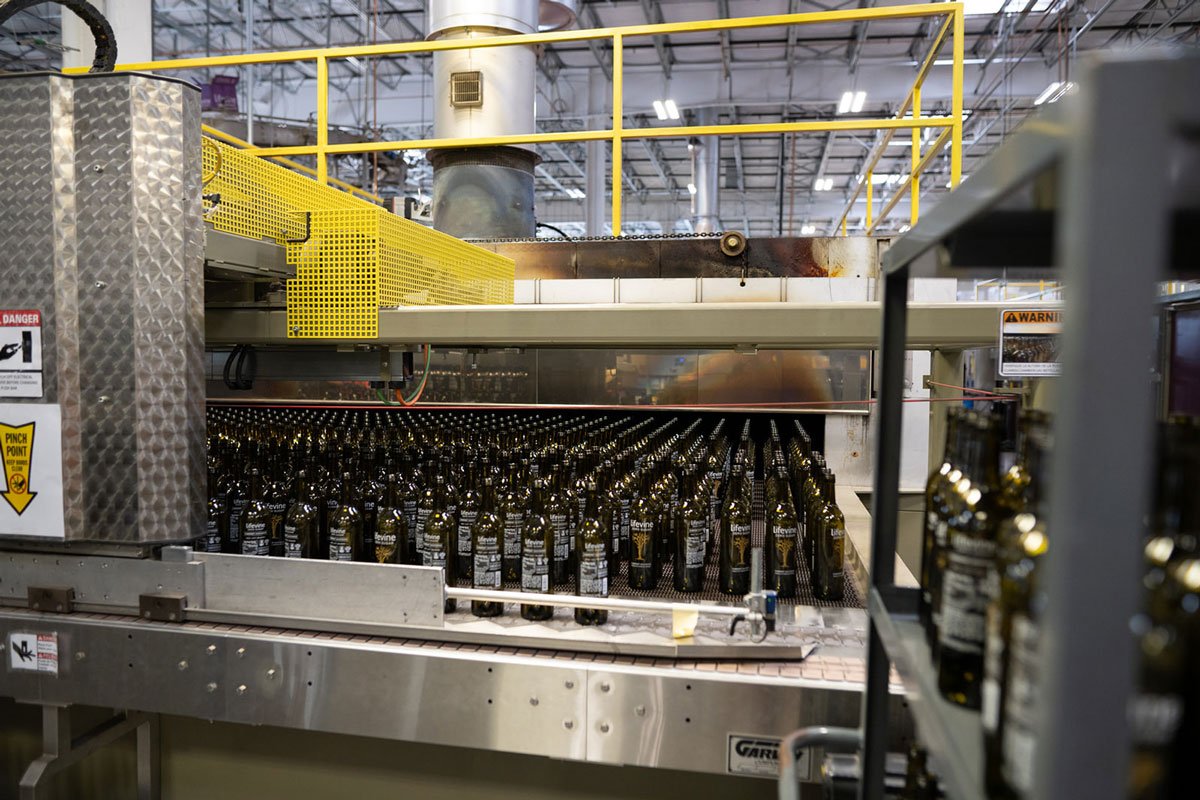
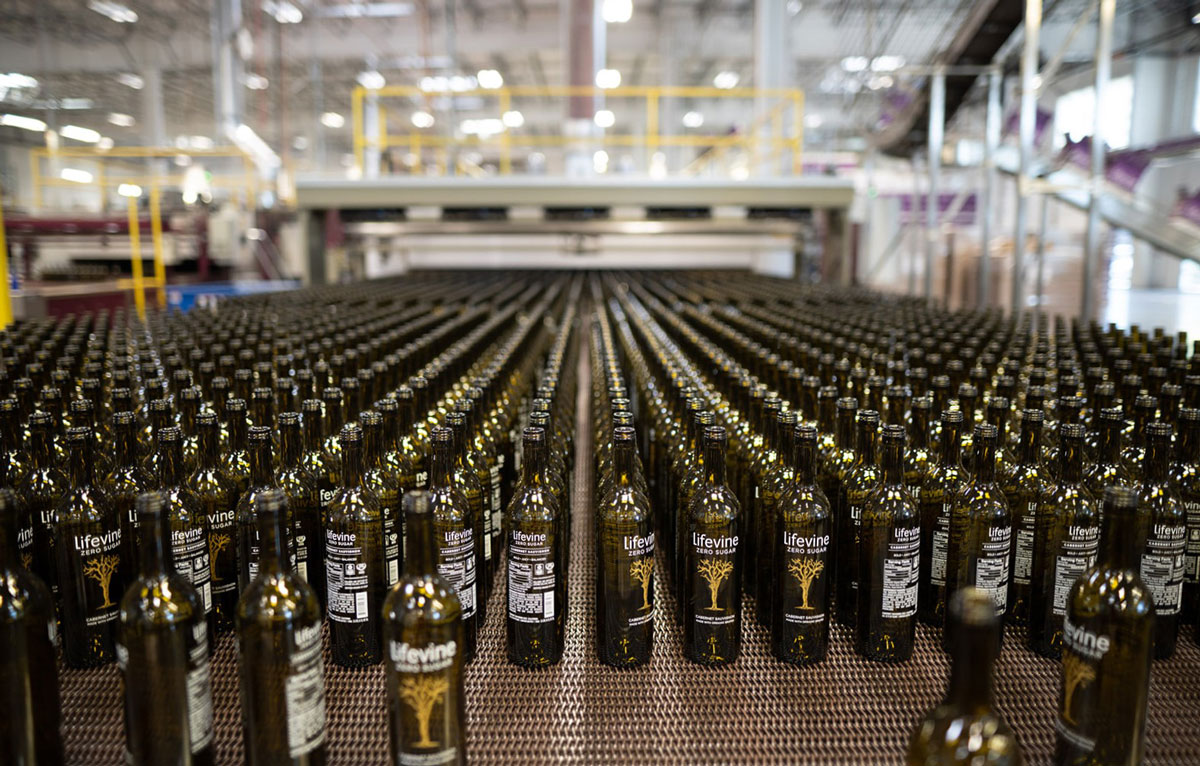
After each layer is applied, the bottles go through a Lehr, reaching temperatures up to 1180°F. That’s where the ink and glass come together.
A Lehr is a tunnel kiln. Bottles move through it on a conveyor and follow a controlled heating and cooling cycle. At high temperatures, the ceramic material in the ink softens and merges with the glass surface. As it cools, the design becomes part of the bottle itself.
This is where screen printing really separates from labels or surface coatings. There’s no adhesive, no film, and nothing sitting on top that can lift or break down over time.
Cold End Spray: Protecting the Bottle After Firing
Firing creates the bond between the ink and the glass, but there’s another step that helps protect the bottle once it leaves the Lehr.
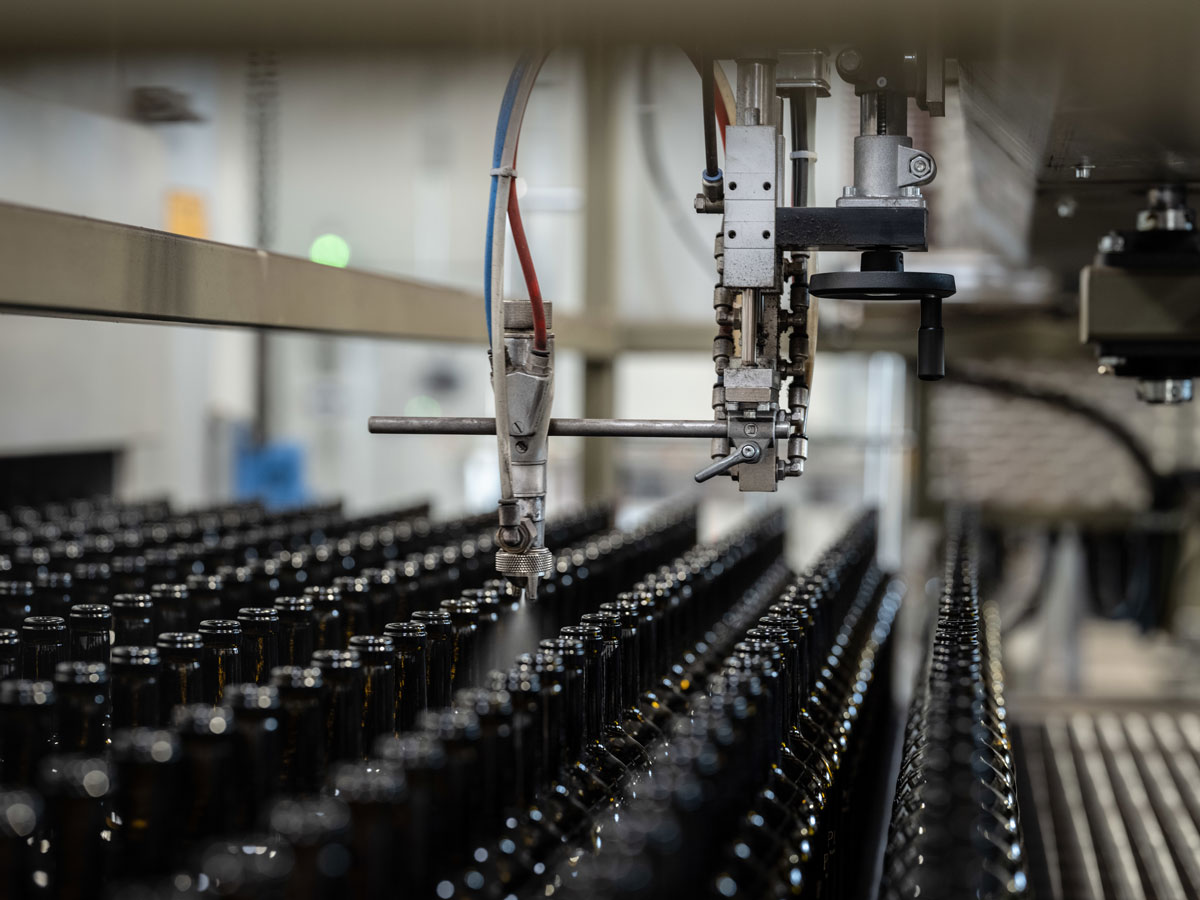
After decoration, bottles go through a cold end spray (CES) process. This applies a very light surface coating that improves scratch resistance during handling, packing, and filling. At this stage, the decoration is already fused to the glass, so the goal isn’t adhesion, it’s protection.
The system sprays a small amount of lubrication product across the bottle surface. It’s mixed with water through a dosing unit on the Lehr and then delivered to a spray gun, where it’s atomized into extremely fine droplets.
That fine mist creates a consistent, nearly invisible layer on the glass. It reduces friction between bottles as they move through production lines, are packed into cases, and travel through distribution. Less friction means fewer abrasions, especially in high-contact areas like the shoulder and body.
In real terms, cold end spray helps maintain the look of the bottle from production to the shelf. It supports the durability created by ceramic inks and firing, making sure that what leaves our facility arrives in the same condition.
What Durability Looks Like in Real Use
Durability shows up in everyday handling. On the production floor, in storage, on the shelf, and in the customer’s hands.
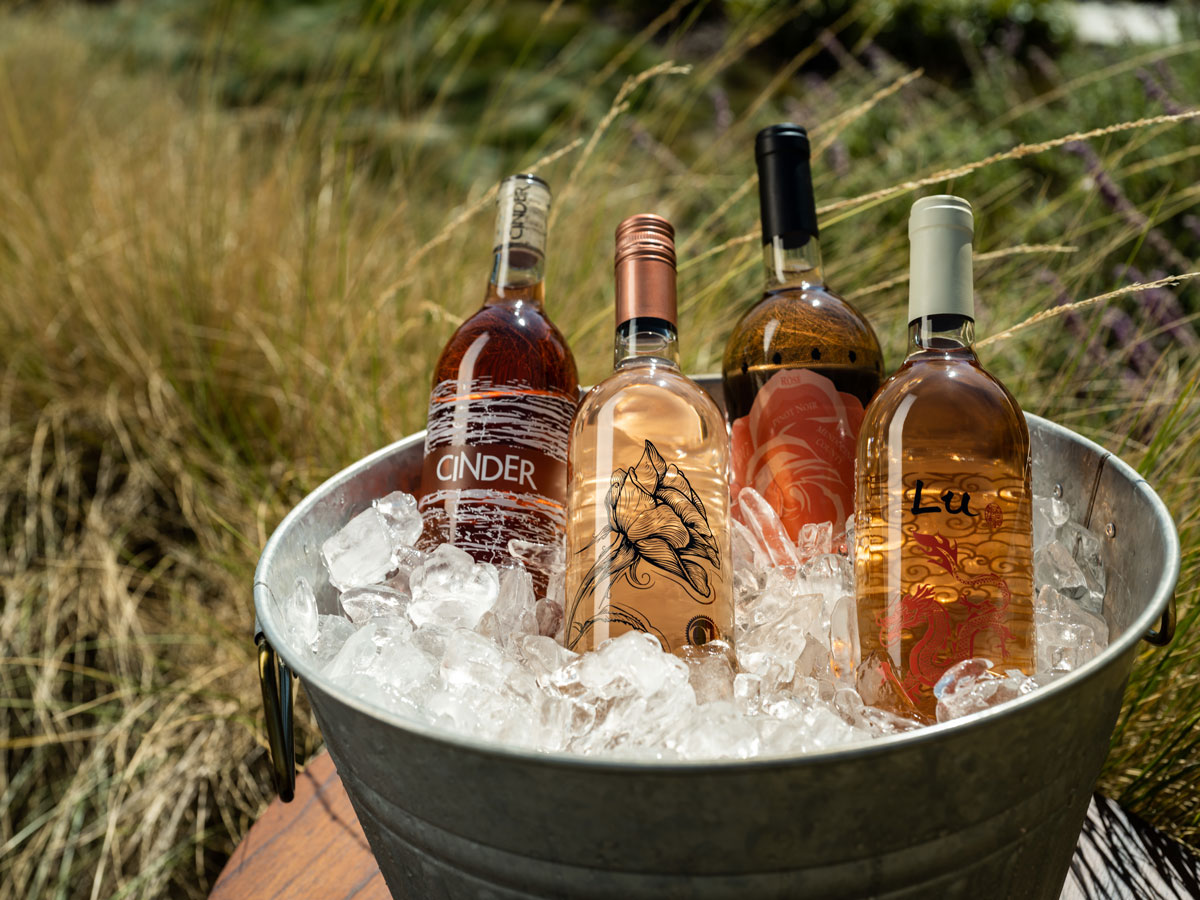
Screen-printed bottles are built to handle moisture, cold temperatures, and repeated contact. The design doesn’t fade, scratch off easily, or lift when exposed to condensation or transport. For wines that are stored for years, that consistency matters. The bottle looks the same when it’s opened as it did when it left the winery.
There’s also a practical benefit during bottling. The bottles arrive already decorated, so your team can focus on filling, corking, and foiling. You’re not applying labels on the line, which removes a common source of errors.
The bottles are fully recyclable as well, without paper labels or glue to deal with. At the end of their life, they’re still just glass. That also opens the door for upcycling, where bottles can be reused as candles, water carafes, or display pieces, with the decoration remaining intact and part of the design.
Screen Print Capabilities Worth Knowing
Process is one piece of the puzzle. Scale matters too.
Bergin handles runs from 250 cases up to 100,000 cases and works with bottle sizes from 50 ml to 3 L. That range supports both small releases and larger production runs across multiple SKUs.
We also offer full 360-degree wrap screen printing, using the entire bottle as a design surface and working the seam into the artwork so it reads as continuous. Neck and shoulder printing is available as well, which expands the usable space beyond the main body.
Each project is handled by a dedicated Account Manager and Production Artist, typically over a three to four-month timeline depending on complexity. That includes coordination with your glass supplier to keep things moving on schedule.
See the Process in Action
Reading about the process helps, but seeing finished bottles makes the difference.
Browse our screen printed bottle showcase to get a sense of what’s possible with ceramic inks, metallics, precious metals, and full-wrap designs. If you’re planning a project, you can visit our Design Center for specs and guidelines, or reach out directly to start a conversation.