
What Is Screen Printing on Wine Bottles?
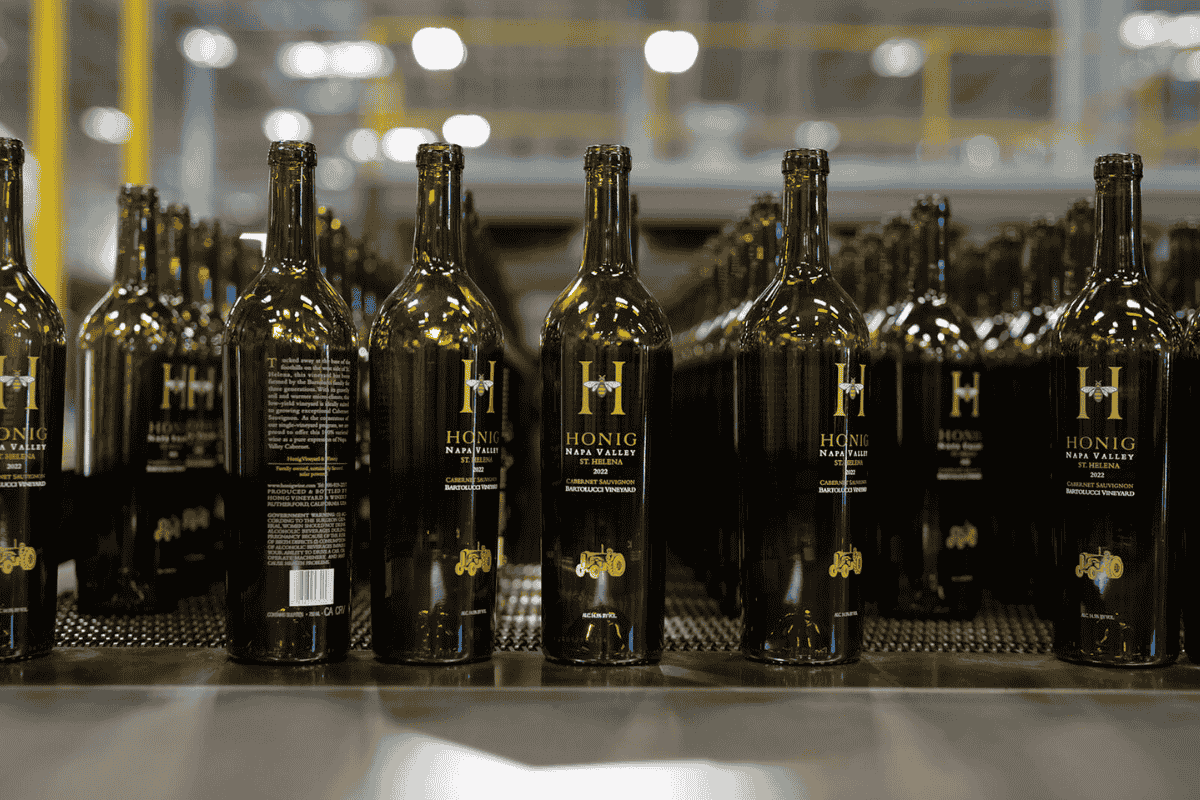
Screen printing on wine bottles is a specialized decorating technique where ink is directly applied to glass, resulting in a permanent, high-end finish. Unlike paper labels added after bottling, screen printing fuses design with the bottle itself, delivering unmatched durability and visual impact. It’s one of the most elegant and modern ways for wineries to build brand recognition and stand out on shelves.
View Our Screen Printed Bottles→
A Brief History of Screen Printing on Glass
The history of screen printing dates back over a thousand years, with its roots in ancient China’s Song Dynasty. Originally used for textiles, the method evolved into an industrial process by the early 1900s. By the mid-20th century, it was adapted for printing on hard surfaces like ceramics and glass, laying the foundation for modern screen printing on bottles.
Glass packaging industries quickly adopted the method due to its resilience and versatility. For wine bottles, screen printing gained traction in recent decades as wineries sought to differentiate their packaging with more premium, sustainable, and design-flexible solutions.
Today, glass bottle screen printing is widely used by wineries and spirits brands looking for permanent decoration that integrates branding directly into the bottle.
How Screen Printing Works on Wine Bottles
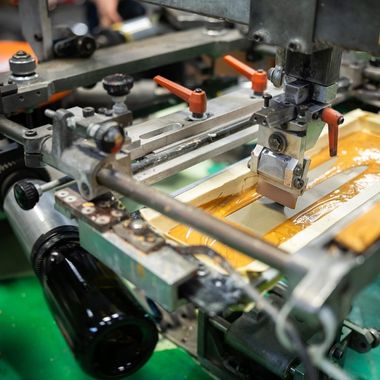
To understand how screen printing works, imagine applying ink through a fine mesh stencil directly onto glass. Here’s how the process flows at Bergin Screen Printing & Etching:
- Design & Screen Creation
A mesh screen is prepared with a light-reactive emulsion. A UV-exposed stencil of the design determines where ink passes through the screen. - Ink Transfer
Bottles are loaded onto machines that rotate them under the screen. Specialized ceramic inks are pushed through the screen using a squeegee. - Curing
Bottles then go through a curing oven (lehr) to bond the ink to the glass, creating a permanent label that won’t peel or degrade.
Bergin’s in-house expertise allows clients to bring even the most intricate designs to life with precision with various advanced screen printing glass techniques, going beyond traditional labeling applications.
Types of Screen Printing That Work on Glass Bottles
There are several types of screen printing used across glass formats, each delivering a unique aesthetic or functional benefit:
- Single-Color Printing
Perfect for logos, typography, or minimalistic branding. - Multi-Color Printing
Enables rich, layered visuals, each ink color is applied with a separate screen. - High Fire Thermal Plastic Inks
Permanently fuse to glass, offering the most durability and color richness - Metallic, Precious Metals, Interference Inks
Add dimension and shine, commonly used for reserve wines and luxury SKUs.
At Bergin, we’ve been perfecting this delicate process for over twenty years. Each project begins with a collaborative approach to determine the ideal technique for the bottle mold, artwork style, and brand goals.
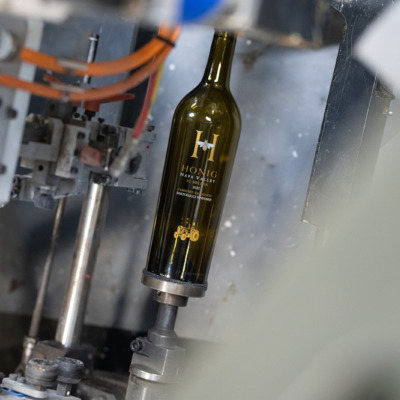
Explore Our Screen Printing Service→
Benefits of Screen Printing on Glass Bottles
The benefits of screen printing are both visual and practical:
- DURABILITY
No peeling, fading, or smudging. Screen-printed bottles withstand temperature shifts, moisture, and handling better than labeled counterparts. - BRANDING
Screen printing creates a seamless, tactile finish that elevates perception. The bottle becomes part of the brand story. - SUSTAINABILITY
Eliminates paper waste, adhesives, and the carbon footprint of label printing and application making glass bottle screen printing a more sustainable packaging solution. - OPERATIONAL EFFICIENCY
With direct-to-glass printing, wineries can skip label application and streamline their bottling workflow. - DESIGN VERSATILITY
From full-wrap artwork to textured inks, the creative potential is unmatched when using screen printing on glass bottles.
Michael Bergin, president and owner of Bergin Screen Printing & Etching, said it best in a recent interview:
“We’re helping wineries tell their story through the bottle itself. When someone walks into a tasting room or wine shop, packaging is your first impression—screen printing helps make it unforgettable.”
Listen to the full interview →
Why Is Screen Printing Used on Wine Bottles?
Why is screen printing used so widely in wine today? The answer lies in consumer perception and market differentiation.
Wine drinkers increasingly equate screen-printing on wine bottles with craftsmanship and quality. In a world flooded with adhesive labels, a screen-printed design immediately signals something special. It also eliminates concerns like bubbles, tears, or wrinkling, issues that undermine shelf appeal.
Compared to traditional labeling:
- Screen printing is permanent, sleek, and fully integrated.
- Paper labels, while flexible and low-cost, can degrade over time and often look generic.
Bergin’s screen printing service supports wineries of all sizes, from small, hands-on producers to established estates, helping each craft packaging that reflects the quality and character of their wine.
Other Screen Printing Applications for Wineries
Screen printing isn’t limited to the standard 750ml wine bottle. Bergin’s expertise extends to a wide range of glass packaging that helps wineries build brand continuity and customer loyalty. Examples include:
- Magnums & Collector Bottles
For large formats, exclusive gifting opportunities, or anniversary editions. - Olive Oil, Vinegar, Beer, and Spirits Bottles
For wineries branching into culinary or lifestyle products screen printing on glass helps maintain consistent branding across multiple product lines.
Explore what’s possible in Bergin’s design gallery:
Join the shelf-worthy wine brands →
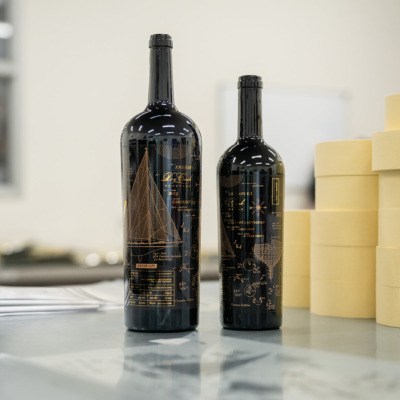
The Bergin Difference: Design to Fulfillment
Based in Napa Valley, Bergin Screen Printing & Etching offers more than printing, they provide a full-service solution that includes:
- In-house design guidance
- Screen printing and etching
- Dressing (wax, foil, capsules)
- Final packaging and shipping
This integrated model makes Bergin a trusted partner for wineries looking to elevate their presentation and streamline operations.
Making a Lasting Impression on the Shelf
In the wine world, presentation is part of the experience. Screen printing elevates that aesthetic, turning bottles into keepsakes, gifts, and brand ambassadors. For wineries who value quality and storytelling, screen printing on glass offers a bold, beautiful, and practical path forward.
Ready to bring your next label to life?
Get a quote for your custom wine bottles →
Frequently Asked Questions About Screen Printing
What is screen printing on wine bottles
Screen printing on glass bottles is extremely durable. Because the inks are fired onto the glass during the curing process, the decoration becomes permanent and resistant to moisture, temperature changes, and regular handling throughout the wine distribution process.
Is screen printing better than wine labels?
For premium wines, screen printing offers several advantages:
- Permanent branding
- No peeling or bubbling labels
- Higher perceived value
- Improved shelf impact
Labels remain useful for regulatory information, but many wineries combine both methods to balance compliance and visual design.
Can screen printing be used on all wine bottle shapes?
Most standard wine bottle shapes can be screen printed, including: Bordeaux, Burgundy, Champagne, and Magnums. However, complex bottle molds or heavily textured glass may require slight design adjustments to ensure accurate alignment and consistent print quality.
How many colors can be screen printed on wine bottles?
Wine bottle screen printing can include multiple colors, but each color requires a separate screen and printing pass. Premium bottles often feature metallic inks, precious metals, or textured finishes to create a more luxurious visual effect.
Is screen printing on wine bottles sustainable?
Yes. Screen printing on wine bottles can support more sustainable packaging practices because it eliminates paper labels, adhesives, and additional materials used in traditional labeling. By decorating the glass directly, wineries can reduce packaging waste while maintaining a premium brand presentation. Many wineries now choose screen printing on wine bottles as a long-lasting, eco-conscious solution that combines durability, shelf appeal, and reduced environmental impact.