
Glass Etching for Wine Bottles: Choosing the Right Artwork Style for Readability and Luxury
The decision to etch a wine bottle is a statement about the wine inside. But the second decision, choosing the right artwork style, shapes everything that follows: how clearly your brand reads on the shelf, how the design translates through etched glass, and whether the finished bottle feels like a keepsake or a product.
At Bergin, glass etching design for wine bottles is guided by this principle: every artwork choice has a technical consequence. Understanding how design characteristics map to etching capabilities helps brand managers and packaging directors make informed decisions before production begins, and avoid costly revisions after.
Why Artwork Style Has Technical Weight in Glass Etching
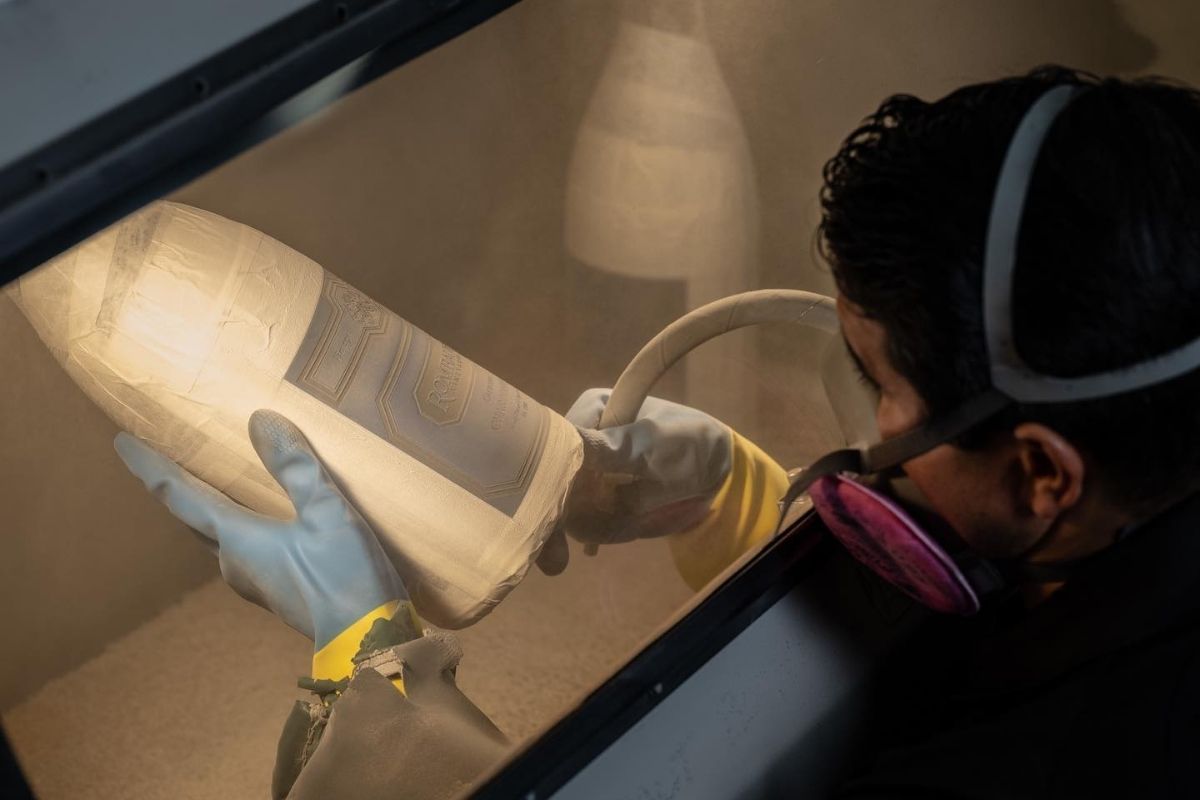
Glass etching works by removing material from the bottle’s surface, revealing the raw glass beneath. The contrast between the etched area and the original glossy surface creates the design.
This reversal has direct implications for artwork. A design that works beautifully as a paper label may not translate cleanly into etched glass without modification. Fine hairlines can disappear at certain depths. Photographic gradients require a specific technique to render accurately. Small fonts at certain point sizes may lose legibility.
Bergin’s team, including etchers with over 30 years of experience, evaluates artwork against these constraints during the production artist review. Still, arriving at the consultation with an understanding of how design styles behave in etching gives your project a stronger starting point.
The Core Design Challenge: Legibility and Luxury at Once
Readability and premium presentation can appear to be in tension in engraved bottle artwork. Highly detailed, intricate designs carry visual richness that reads as luxury, but complexity that is too fine for sandblasting loses definition. Simpler designs may hold greater legibility but risk feeling sparse on a premium bottle.
The resolution to this tension lies in matching artwork style to the appropriate etching technique. Bergin offers four distinct etching capabilities, each suited to a different design language:
Standard Etch for clean, two-dimensional linework and typography
Deep Etch for bold, dimensional emblems and layered imagery
Photo Etch for photographic accuracy, fine gradients, and tonal detail
Text Drop and Numbering for personalized additions such as sequential numbering or individual names
The artwork you bring to the table determines which of these techniques, or which combination, will serve the design best.
Artwork Styles That Excel in Etched Glass
Clean Linework and Typographic Designs
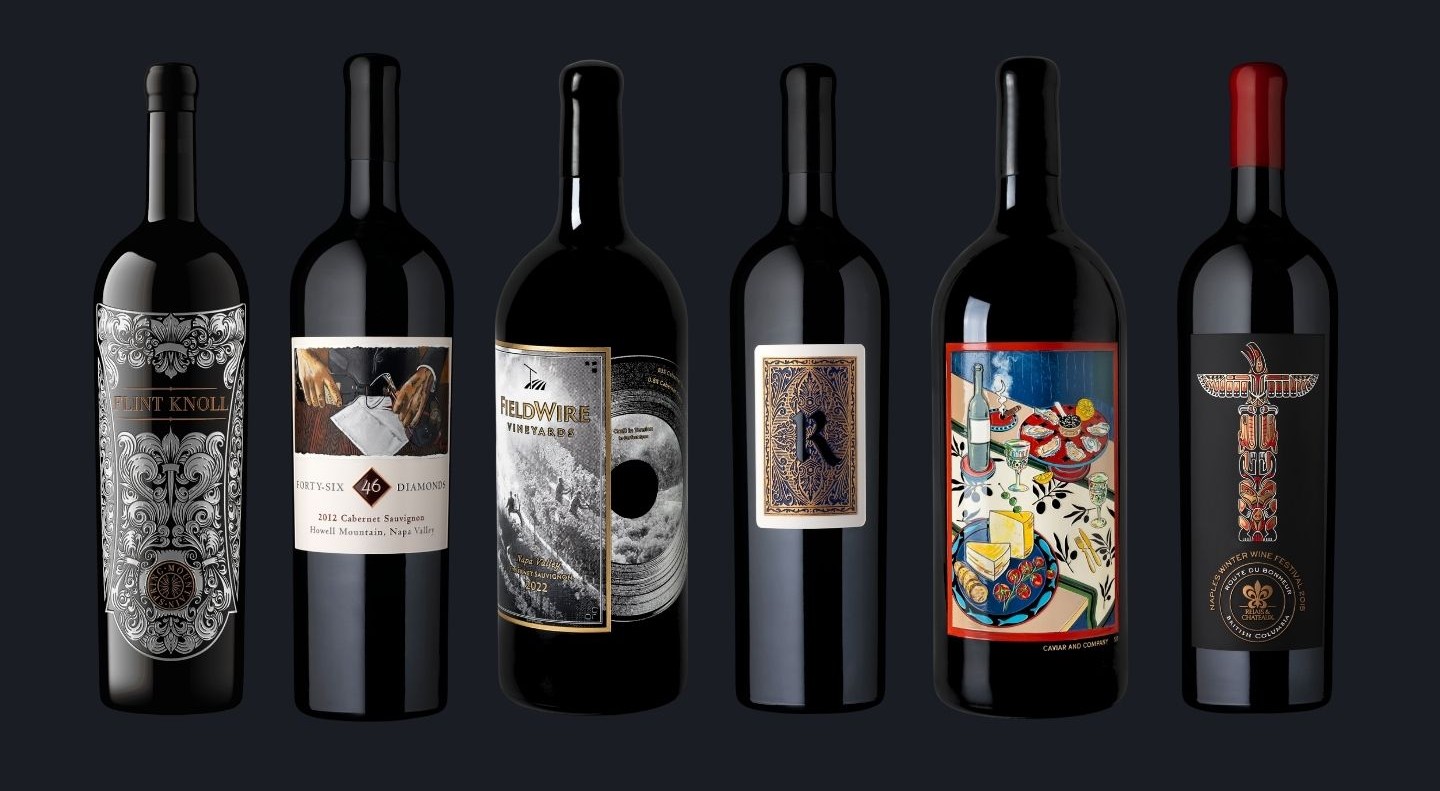
Standard etching, the most streamlined technique, uses a single sandblast pass to expose the raw glass surface. Designs with well-defined edges, consistent line weights, and clear negative space perform well here. Logos built on geometric forms, estate names in serif or sans-serif type, and simple crests with minimal interior detail translate cleanly.
For etched logos on bottles, typeface selection matters as much as letterform. Typefaces with stroke contrast (variation between thick and thin strokes) work well at larger point sizes but may lose their thinner strokes at smaller scales. Consistent-weight typefaces, such as geometric sans-serifs, hold their form more reliably across size reductions.
Backgrounds also factor in. Standard etch allows the design to be etched against the original glass, or the design can be reversed so the background is engraved and the letterforms or logo elements remain glossy. Both approaches can serve legibility, depending on the original design.
Bold Emblems and Estate Crests
Deep etching uses a multi-stage process that carves into the glass at varying depths, producing a more dimensional, sculpted finish. This technique is well-matched to artwork styles that call for visual weight: estate crests, heraldic emblems, botanical illustrations, and imagery with strong silhouettes.
For deep-etched designs to read well, the artwork should have clear separation between foreground and background elements. Designs with many closely spaced fine elements may compete visually when depth variation is introduced. Designs with distinct layers, a central motif against a differentiated background, for example, give deep etching room to demonstrate its dimensional quality.
This technique also pairs effectively with hand-applied paint. Bergin’s paint artists apply specialty process enamel paints and airbrushed coverage by hand, and deep-etched recesses provide natural boundaries that help define where color sits. The result can layer tactile depth with color in a way that no flat decoration achieves.
Photographic and Tonal Artwork
Photo etching is engineered for artwork that carries a continuous tone: portraits, vineyard landscapes, botanical drawings with shading, and any image that depends on gradients rather than flat fills. Where standard etching interprets an image, photo etching is designed to stay true to it.
The luxury positioning of photo-etched bottles is distinct. Rather than the graphic weight of a crest or the architectural clarity of typography, photo etching communicates intimacy and specificity. A vineyard mapped in precise tonal detail, or a founder’s portrait rendered with photographic accuracy, signals that the bottle carries a specific story rather than a brand symbol.
Artwork prepared for photo etching should be high resolution and provided in a format that preserves tonal range. Bergin’s production artists work closely with clients during the artwork review to assess whether an image carries enough tonal information to achieve the desired result.
Designing for Luxury: What Elevates an Etched Bottle Visually
Beyond technique, certain design decisions consistently contribute to the luxury reading of glass etching design for wine bottles.
Proportion and placement. A design that occupies the label area with considered negative space, rather than filling every available inch, signals restraint, which reads as confidence. An estate crest positioned slightly above center on a Bordeaux-style bottle uses the bottle’s own geometry to frame the artwork.
Scale relationships. The relationship between the primary design element and secondary type (a varietal name, vintage year, or vineyard designation) shapes the hierarchy of the label. When the primary artwork is large enough to establish itself before the eye reaches the text, the bottle reads clearly even from a distance.
Surface play. Etching’s inherent luxury quality comes partly from the way engraved and glossy surfaces interact with light. Designs that create meaningful contrast between etched and untouched areas, rather than etching the full label surface uniformly, make better use of this material property.
Hand-painted color. Strategic use of Bergin’s hand-applied paints, including specialty enamels and custom spray finishes, can direct the eye and reinforce hierarchy within the design. A single etched crest with a deep-painted fill against etched type on the bottle’s surface uses color to create focal priority rather than relying on size alone.
Design Considerations by Application
The intended use of the etched bottle also shapes the most effective artwork approach.
Tasting room and wine club releases often prioritize emotional resonance and collectability over broad shelf legibility. Artwork can be more intricate, because the viewer is already engaged. Photo etching and deep etching both serve these contexts well.
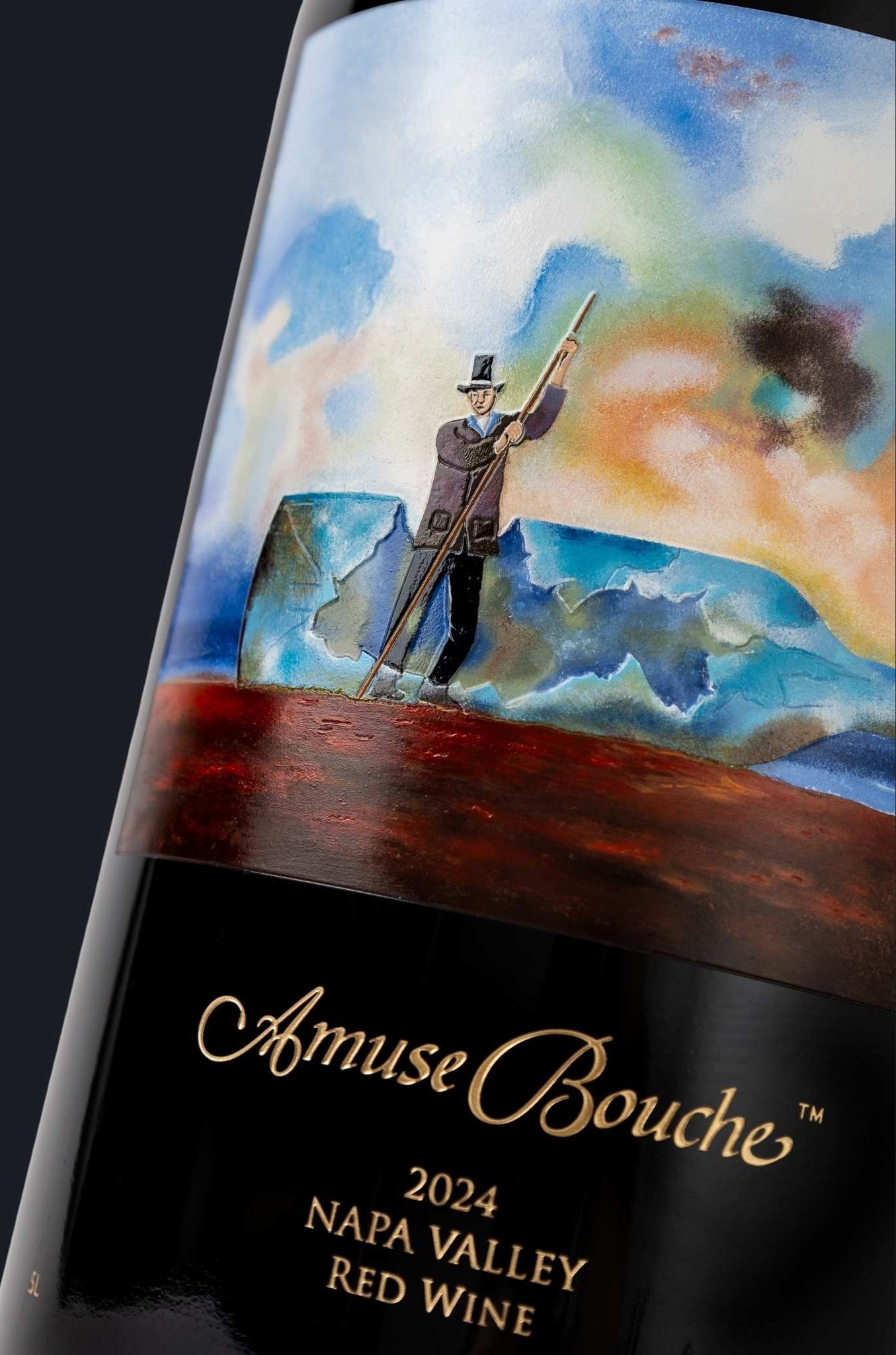 Limited and commemorative editions call for designs that will be recognized as distinct from the winery’s standard line. A numbered bottle with a deep-etched seasonal illustration, or a portrait of a founding winemaker rendered in photo etch, communicates the edition’s significance without requiring explanatory copy.
Auction and gift pieces often need a design language that stands on its own in the absence of any label copy. The bottle itself is the message. In these contexts, the artwork style should carry enough detail and dimensional quality to reward close examination.
Bergin works on filled bottles across all of these applications, since etching is a cold process that never exceeds 66 degrees Fahrenheit, and provides dedicated cold storage for full-bottle projects. This means a wine already bottled for the upcoming release can still move into an etching program.
Working with Bergin’s Team on Artwork Refinement
Bringing existing artwork to a consultation is always the right starting point. Bergin’s production artists review your design against the planned technique and identify areas where refinements will improve the final result. This may involve adjusting minimum line weights, simplifying interior detail in certain areas, or recommending a shift from standard to deep etching based on what the artwork calls for.
Bergin also works from diverse source material: existing paper label designs, original oil paintings, hand-drawn sketches, and digital files. The studio’s etchers handle the translation from source to glass surface, including the mask creation and precision sandblasting stages, with inspection at every point in the process.
A Note on Artwork File Preparation
Regardless of the etching technique, arriving at production with clean, high-resolution artwork in a vector format (AI, EPS, or PDF) gives the most flexibility. Raster files are workable for photo etching when resolution is sufficient, but vector formats preserve clean edges for all other techniques. Bergin’s team can advise on the specific requirements for your project during the initial review.
If you’re planning an etched bottle program for a new release, a commemorative edition, or a tasting room series, Bergin’s team is available to review your artwork and outline the path to production. Request a quote or browse etching projects in the Showcase to see the range of design styles in production.