
Screen Printing on Glass Bottles: Process, Durability, and Design Options
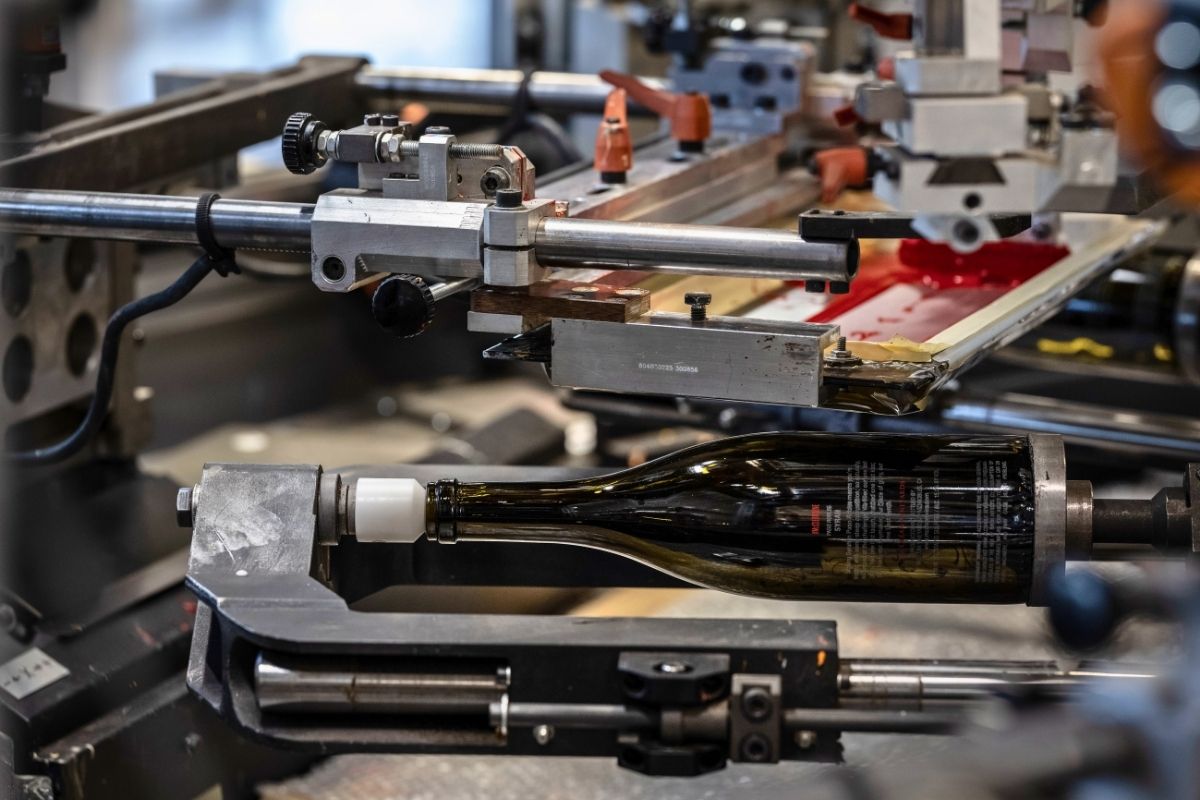
Screen printing on glass bottles is a decoration method used by wineries, distilleries, and food and beverage brands that print graphics directly onto the glass surface. Instead of applying a separate label, ink is transferred through a mesh screen and cured onto the bottle at high temperatures up to 1,180°F. The result is a permanent design that resists moisture, abrasion, and long storage periods. This guide explains how screen printing on glass bottles works, why it is used for beverage packaging, how durable it is, and how it compares with other glass bottle decoration methods.
What Is Screen Printing on Glass Bottles?
Screen printing on glass bottles is also known as applied color labeling, or ACL. The process uses high-fire thermal plastic inks applied through a mesh screen directly onto the bottle surface. Those inks are then permanently fused to the glass through a high-temperature firing process. The decoration becomes part of the bottle itself.
Screen printing is used across a range of beverage categories, including wine, spirits, beer, olive oil, and specialty food packaging. It is especially common in premium wine production, where brand presentation and long-term label integrity are critical.
At Bergin, glass bottle screen printing services are available for bottle sizes from 50ml to 3L, with production volumes ranging from 250 cases to 100,000 cases per run.
How Screen Printing on Glass Bottles Works
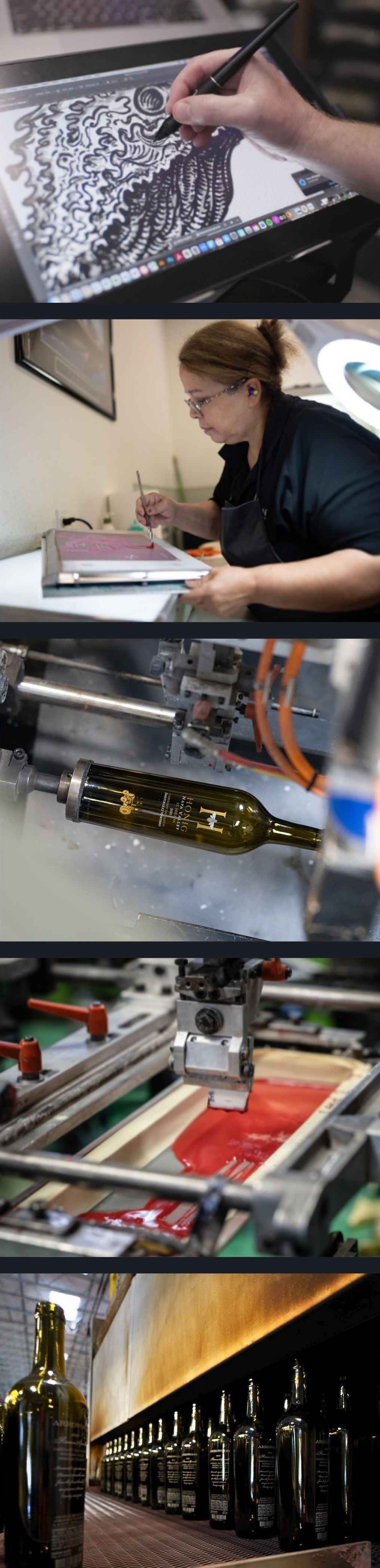
The screen printing process follows a structured sequence from artwork preparation through final delivery.
- Artwork preparation and color separation: Each color in the design is separated onto its own layer. One color per screen is required for the printing process. Files are prepared in vector format to ensure clean, scalable output. Bergin’s in-house art team works alongside client designers or creates artwork from scratch to ensure files meet print specifications.
- Screen creation: Once artwork is approved, screens are prepared for each individual color. Each screen transfers one layer of ink during a single printing pass.
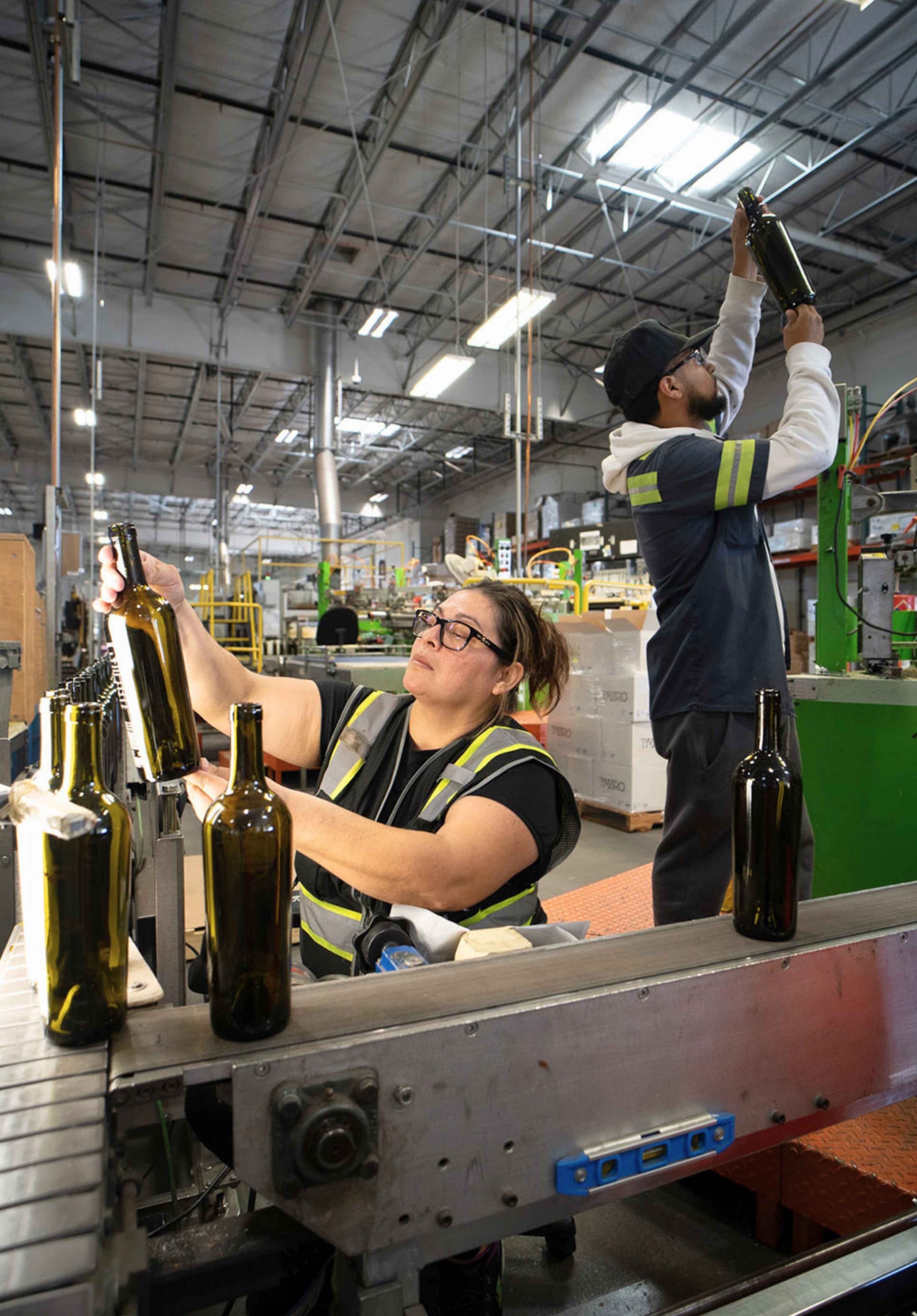
- Bottle positioning and alignment: Bottles are loaded onto Italian-manufactured print machines specifically engineered to handle cylindrical glass vessels. Bergin operates eight machines, three fully automatic and five semi-automatic, across three complete production lines.
- Ink application through the screen: High-fire thermal plastic inks are applied to the bottle surface through the prepared screens. Each color layer is applied in sequence. Bergin can print up to seven colors per design and works with standard colors, custom mixes, as well as precious metal inks, including 22-carat gold, white gold (platinum), and copper.
- Heat curing in the Lehr: After printing, bottles are fired in a Lehr at temperatures up to 1,180°F for a minimum of two to three hours. This process permanently fuses the ceramic paint to the glass surface. The fired design cannot be peeled, scraped, or washed away under normal conditions.
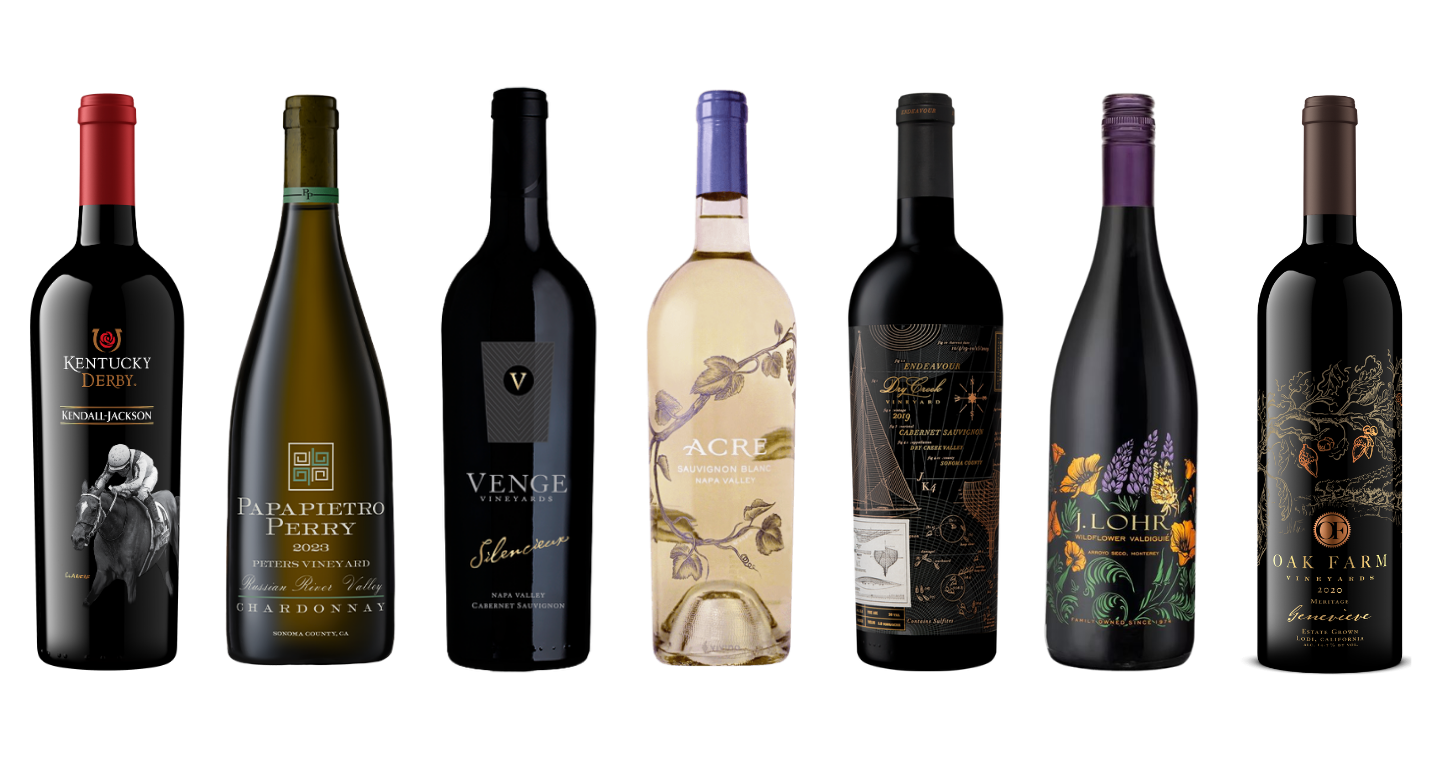
Multicolor designs require a separate screen for each color. Each layer is printed and precisely aligned before the bottles proceed to the Lehr. View screen printed wine bottles in Bergin’s project showcase for multicolor and precious metal examples.
Benefits of Screen Printing on Glass Bottles
Screen printing produces a decoration that is integral to the bottle. This creates several practical advantages for wineries and beverage brands, particularly those choosing screen printing on glass bottles as a long-term packaging strategy.
- Permanent decoration: The curing process bonds the design directly to the glass. The decoration does not rely on adhesive and cannot delaminate, which is particularly relevant for bottles stored under cellar conditions for extended periods.
- Resistance to moisture and abrasion: Screen printed designs are waterproof, scuff-proof, and tear-proof. They maintain their appearance during transport, cold storage, refrigeration, and ice bucket use.
- Consistent appearance across production runs: Because ink application is machine-controlled, color consistency is maintained from the first bottle to the last, whether it’s 250 or 100,000 cases.
- Recyclability: Screen printed bottles are 100% recyclable. The ceramic paint fuses into the glass during repurposing and does not require removal before recycling.
- Simplified bottling day: Bottles arrive at the winery already decorated. The wine team only needs to focus on filling, corking, and foiling, removing the decoration step from the bottling line workflow.
- Design range: Screen printing supports up to seven colors, 360-degree wrap designs, neck and shoulder decoration, precious metal inks, and custom color mixes. This range covers standard varietal labels through highly detailed, multi-layer commemorative designs.
Request a bottle printing quote to begin the conversation about your project requirements.
Screen Printing vs. Paper Labels on Bottles
Each decoration method serves different production and brand needs. This comparison of screen printing vs paper labels on bottles helps brands select the right approach for each product tier.
- Durability. Screen printing is permanent. The design is heat-fused to the glass and cannot peel, lift, or delaminate. Traditional labeling durability varies based on adhesive quality and storage conditions.
- Design flexibility. Screen printing supports up to seven colors, 360-degree wrap designs, precious metal inks, and custom textures. Traditional labeling offers a wide range of substrate and finish options with fewer constraints on run size.
- Appearance. Screen printed decoration is integral to the glass surface. Traditional labeling applies a material to the glass, which is visible at the label edge.
- Small batch suitability. Screen printing requires a minimum of 250 cases for standard bottle sizes. Traditional labeling is available for single units or short runs with no minimum constraint.
Traditional labeling methods are often the practical choice for small production runs, frequent label design changes, or shorter production timelines. Screen printing is typically selected when permanence, moisture resistance, and production scale efficiency are the priorities.
How Durable Is Screen Printing on Glass?
Durability in screen printing is a direct outcome of the curing process. When bottles pass through the Lehr at temperatures up to 1,180°F, the ceramic paint bonds at a molecular level with the glass surface. The result is a decoration that performs under the following conditions.
 Water And Moisture Exposure
 Water And Moisture Exposure
The cured design is fully waterproof. It will not soften, lift, or peel when exposed to condensation, ice, cellar humidity, or repeated washing.
Abrasion During Transport
Screen printed bottles can be packed, palletized, and shipped without degradation to the design. The fired surface resists scuffing that occurs during transit and handling.
Cellar And Cold Storage
The decoration remains stable under refrigerated and cellar conditions. There is no adhesive to soften or fail over time.
Long-Term Storage
Screen printed designs are appropriate for wines intended for extended aging. The design remains intact from the time of decoration through release.
Glass Bottle Decoration Methods Used by Beverage Brands
Screen printing is one of several direct-to-glass decoration methods available for wine and spirits packaging. Each method has distinct characteristics suited to specific production and brand goals.
Screen Printing (ACL)
As described throughout this guide, screen printing applies heat-fused ceramic paint directly to the glass. It is suited for production volumes starting at 250 cases and is the standard choice for large-run decorated wine and spirits bottles. View Bergin’s screen printing production capabilities for full technical specifications.
Glass Etching And Engraving
Etching (also called engraving) is a cold process in which the glass surface is sandblasted to create a textured design, followed by hand painting. Unlike screen printing, etching can be performed on filled bottles because no heat is applied at any point in the process. Bergin’s etching studio maintains a temperature-controlled environment, keeping filled bottles at no higher temperature than 66°F throughout production.
Etching is available in quantities from a single bottle up to 10,000 bottles, with no minimum order requirement, making it appropriate for commemorative releases, tasting room offerings, auction lots, wine club selections, and private collector pieces. Bottle sizes from 375ml to 27L are supported. Request a custom etched wine bottle consultation to discuss your project.
Wax Dipping
Wax is applied as a finishing treatment to the bottle closure and capsule area. Options include full dips, half dips, drip effects, dollops, and embossed or debossed wax stamps. Wax dipping adds a tactile detail to the package and is frequently combined with screen printing or etching. No quantity minimums apply.
Choosing Screen Printing on Glass Bottles
Screen printing on glass bottles is widely used in wine and spirits packaging because it produces a permanent design that withstands moisture, storage, and transport. The process applies high-fire thermal plastic inks through a mesh screen and cures them into the glass at temperatures up to 1,180°F in a Lehr. The decoration becomes a permanent part of the bottle and delivers consistent results across large production runs.
Many beverage brands combine screen printing with other glass bottle decoration methods, such as etching or wax dipping, to achieve specific packaging goals across different product tiers. Companies evaluating screen printing on glass bottles should review printing requirements, production volume, artwork complexity, and timeline before selecting a decoration method.
Get a Custom Bottle Decoration Consultation
Frequently Asked Questions About Screen Printing on Glass Bottles
How Does Screen Printing On Glass Bottles Work?
High-fire thermal plastic inks are applied through a mesh screen onto the bottle surface. Each color uses a separate screen. After printing, the bottles are fired in a Lehr at temperatures up to 1,180°F for a minimum of two to three hours, permanently fusing the design to the glass.
What Are The Benefits Of Screen Printing On Glass Bottles?
Screen printing produces a permanent decoration that does not rely on adhesive. The cured design is waterproof, scuff-proof, and cellar-proof. It maintains a consistent appearance across large production runs and arrives at the winery ready for filling.
How Durable Is Screen Printing On Glass?
Properly cured screen printing resists water, abrasion, and long-term storage conditions. The ceramic ink bonds to the glass during firing and performs under refrigeration, cellar humidity, transport, and extended aging.
How Does Screen Printing Compare To Traditional Labeling Methods?
Screen printing is more durable under moisture and storage conditions and requires no adhesive. Traditional labeling methods are often more practical for small runs, frequent design changes, or shorter production timelines.
What Other Glass Bottle Decoration Methods Are Available?
Common methods include etching (also called engraving), wax dipping, and specialty coatings. Etching is a cold, hand-crafted process suited for small quantities and full bottles. Wax dipping adds a finishing detail to the closure. Brands frequently combine methods across a product line.
What Is The Minimum Order For Screen Printing?
Bergin’s standard minimum for screen printing is 250 cases for bottle sizes from 50ml to 750ml. Large format bottles (1.5L and 3L) require a minimum of 120 bottles.
Can Screen Printed Bottles Be Recycled?
Yes. Screen printed bottles are 100% recyclable. The ceramic paint fuses into the glass during the recycling process.
Screen printing on glass bottles remains the standard choice for wineries and beverage brands that need decoration to survive cellar storage, shipping, and years of handling. Request a consultation with Bergin’s Napa Valley team to discuss your next production run.