
What to Know Before Ordering Custom Etched Wine Bottles
Custom etched wine bottles are among the most distinctive forms of winery packaging available. The process permanently transforms the glass itself into the label, resulting in a bottle that collectors keep, tasting rooms display with pride, and wine club members remember. But the artisan nature of the work also means that preparation on the front end shapes everything that follows.
If you are a brand manager, winemaker, or packaging director considering wine bottle etching for the first time, or exploring it for a new program, this guide covers the decisions and details that determine a smooth, successful project.
Understand What the Etching Process Actually Involves
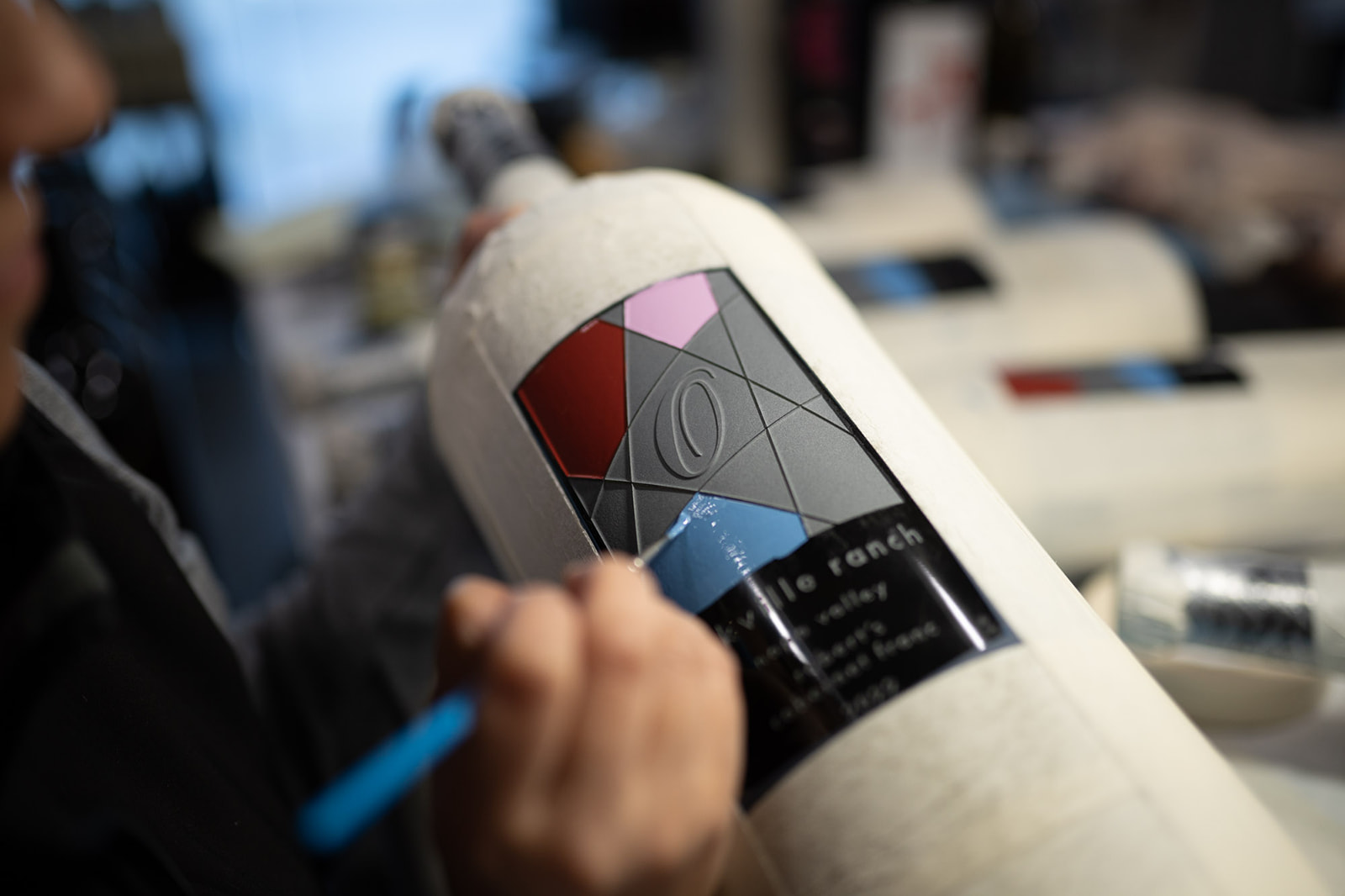
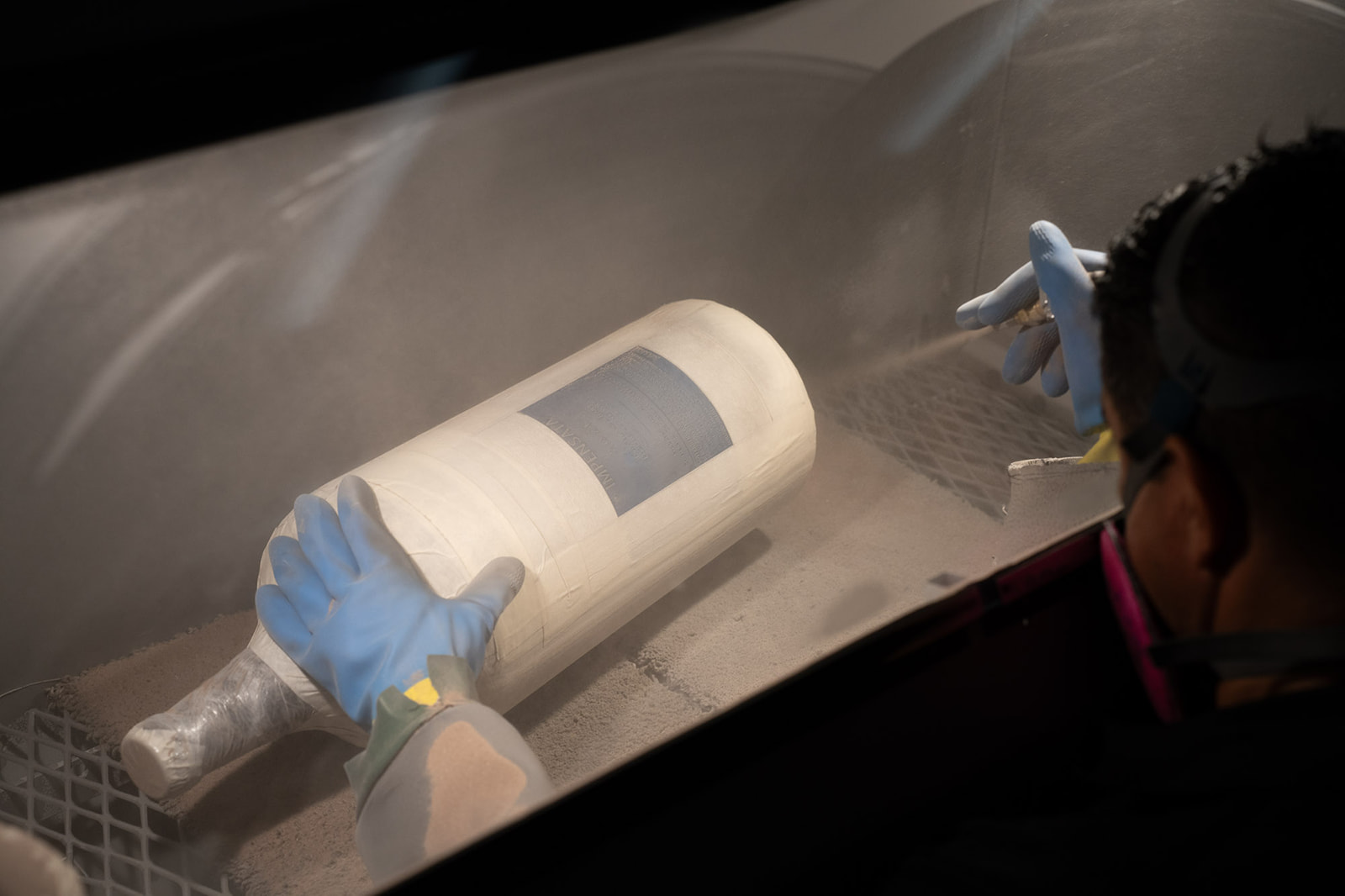
Wine bottle etching is not a digital or automated process. At Bergin, each bottle is hand-etched and hand-painted using a sandblasting method to carve into the glass surface, followed by meticulous paint work applied by hand. Many of our etch artists have been doing this work for over 20 years.
Because etching is a cold process, no heat is applied at any point. That distinction matters for a few reasons covered below, but the most important thing to understand is that every finished piece is genuinely one of a kind. No two etched bottles are identical. The variation is not a flaw; it is the nature of handmade work.
The four primary techniques we use are:
- Standard Etch: A single sandblast pass that exposes the raw glass surface. Clean and versatile, well suited to logos, typography, and simpler graphic elements.
- Deep Etch: A multi-stage process that carves into the glass at varying depths to create a sculpted, dimensional finish. Best for bold imagery and emblems that call for visual presence.
- Photo Etch: Engineered for photographic accuracy, capturing fine detail, gradients, and tonal range. The right choice for portraits, landscapes, and original artwork that needs to stay true to the source.
- Text Drop and Numbering: For personalized details at scale, from individual names to sequential numbering, ideal for limited releases and collector editions.
Understanding which technique fits your design intent is one of the first conversations to have with your account team.
Prepare Your Artwork Before Anything Else
Artwork is where most etching projects succeed or stall. The etched wine bottle design process begins with what you bring to the table, and the format and quality of those files determines how quickly work can move forward.
The preferred file format is a packaged Adobe Illustrator (AI) vector file with live text, including links and fonts. A PDF with outlined text also works. Raster images such as JPEGs are not automatically appropriate and must be reviewed by our art team to confirm quality and printability. Text and logos embedded in raster files typically need to be vectorized before production can begin.
A few specific artwork considerations for etching:
- Fine lines and small details are adjusted to meet minimum production specifications (0.75 to 1 point minimum). If your design relies on very fine linework, expect those elements to be slightly thickened for a clean result.
- Barcodes cannot be etched. They do not scan properly, if at all. If a barcode is required on the finished bottle, plan to apply a barcode sticker separately.
- Etch approval forms are rendered in black and white because they represent the stencil masks used in production, not the final painted result. Color call-outs should be provided separately, or a physical paper label reference can be used for color guidance.
- Shoulder work on Burgundy-style bottles is possible but must be inspected for compatibility before committing to that design direction.
- If you have PMS colors you want matched, provide those references directly. RGB and CMYK references are not accepted. Etching has no strict limit on the number of colors or paints used, which gives this process considerable creative flexibility.
Our in-house art department, led by an Art Director alongside an Etch and Paint Creative Specialist, a Creative Process Specialist, and Production Artists, is here to guide the translation of your vision into a production-ready file. We can also work alongside your external designer or design team.
 Know Your Bottle Before Submitting
 Know Your Bottle Before Submitting
Not all glass is equal from a production standpoint, and the bottles you plan to use have a direct effect on what is possible.
Etching accommodates bottle sizes from 375ml up to 27L, which is a considerably wider range than screen printing. For full bottles, the process works on sizes up to 6L. Bottles larger than 6L must arrive empty due to safety and liability requirements.
Because etching is a cold process with no heat application at any stage, it can be done on filled bottles. This makes etching particularly well suited for tasting room offerings, wine club releases, restaurant and distributor promotions, auction lots, and private collector pieces where the wine is already in bottle.
Our etch studio is temperature-controlled, and we maintain a dedicated cold storage facility for full products in our care. Cold storage is reserved for active production and is not offered as unlimited or indefinite holding.
If you are sourcing glass specifically for an etching project, we work regularly with a range of manufacturers and suppliers and can point you in the right direction. We also carry a limited stock of large format bottles (primarily 3L, 5L, and 6L) intended for custom etching.
If you are planning to supply your own bottles, custom-manufactured or off-the-shelf, communicate that early. We work with customer-supplied glass regularly.
Build the Right Timeline Into Your Production Plan
This is where many first-time buyers are caught off guard. The wine bottle etching process is thorough, and thoroughness takes time.
A typical lead time from initial contact is around four months, depending on order quantity and design complexity. That window covers artwork development, pre-production sampling, and the full production run through quality inspection.
The project moves through these stages: design submission, artwork approval, production, quality control at every stage of masking, etching, and hand painting, and then final delivery.
If your design or other details need to be updated after a project is underway, those updates must be consolidated and submitted 30 to 45 days ahead of your scheduled production date. Every new change requires updated artwork and formal approval. Submitting changes in batches rather than piecemeal is strongly advised.
For programs tied to harvest releases, wine club shipment schedules, or tasting room rollouts, work backward from your desired delivery date and add appropriate buffer. Etching is not a rush process, and the quality control built into each stage exists for good reason.
Consider Quantity and Consistency
One of the genuinely distinctive qualities of etching is that there are no minimum order quantities. You can commission a single bottle or an order in the thousands. This makes etching the right tool for commemorative pieces, auction lots, personalized gifts, limited collector editions, and any program where a small run carries significant weight.
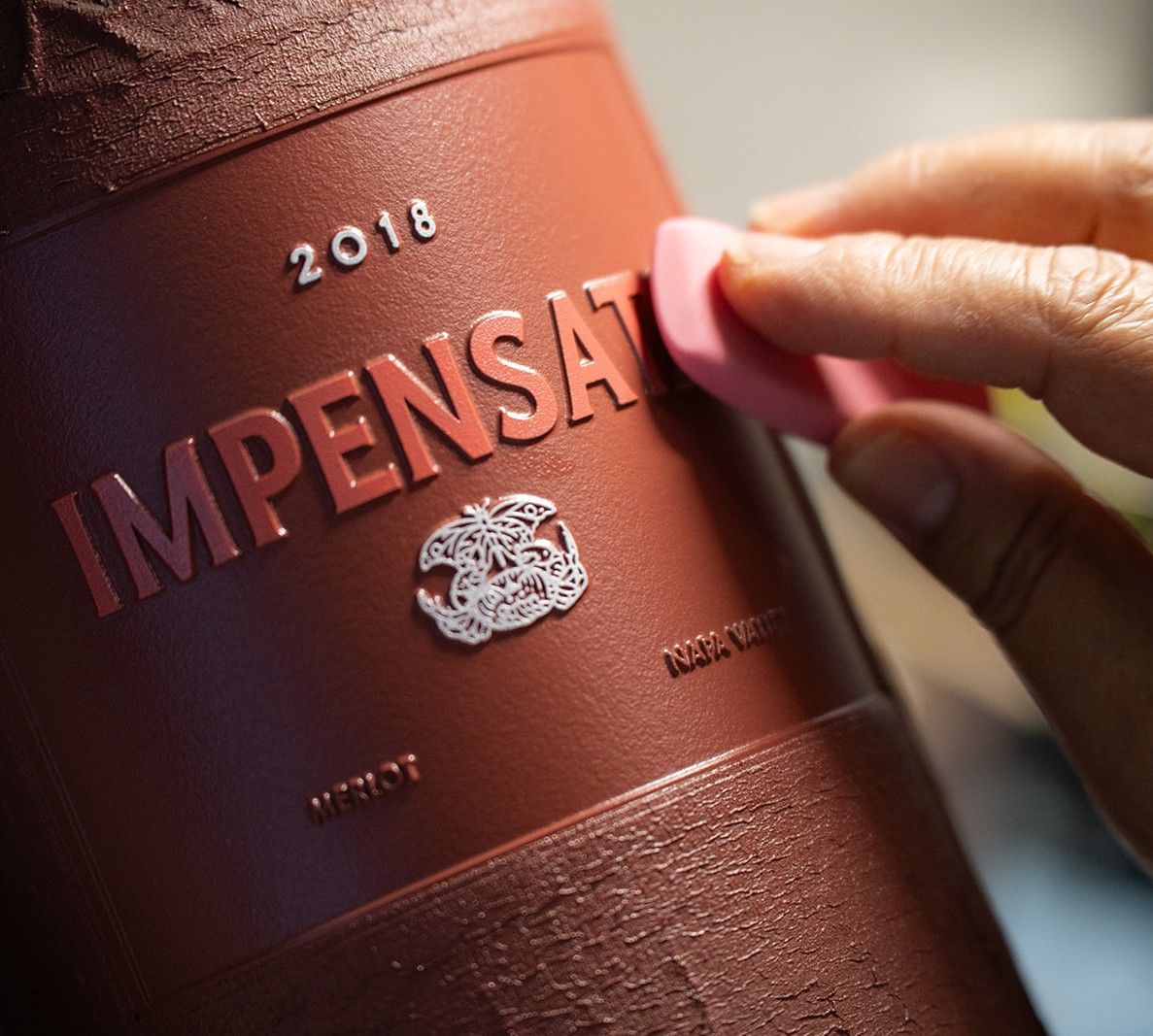
On the consistency question: because each bottle is hand-etched and hand-painted, there will be natural, subtle variation between pieces. This is not inconsistency in quality; it is the hallmark of artisan work. Clients who come to etching specifically for its handmade character understand and value this. If your program requires identical mechanical reproduction across large volumes, screen printing may be the more appropriate service.
Individual sequential numbering is fully achievable in etching. Individual masks can be produced for any number of bottles, making true “1 of 100” or “1 of 500” numbering possible across a run.
Work With a Dedicated Team From Start to Finish
Every etching project at Bergin is assigned a dedicated Account Manager and Production Artist. They guide the program from initial design through completed production and manage all logistics, whether your bottles arrive filled or empty, and however they need to be delivered once finished.
This is a collaborative process. The more clearly you communicate your brand story, design intent, color references, bottle specifications, and timeline requirements at the outset, the more smoothly the project moves. Questions that come up mid-production are more disruptive than questions asked at kickoff.
Frequently Asked Questions
How long does a custom etching project typically take?
A typical lead time is approximately four months from initial contact, covering artwork development, sampling, production, and quality control.
Is there a minimum order for etching?
No. Etching has no minimum order quantity. Orders can range from a single bottle to thousands.
Can you etch on a full bottle of wine?
Yes. Etching is a cold process with no heat applied at any stage, so filled bottles up to 6L can be accommodated. Bottles larger than 6L must arrive empty.
What bottle sizes can be etched?
From 375ml up to 27L.
What file format should I submit for artwork?
A packaged Adobe Illustrator vector file is preferred, with live text and fonts included. A PDF with outlined text also works. Raster images must be reviewed for compatibility.
Can you etch a barcode?
No. Barcodes etched into glass do not scan reliably. Plan to apply a barcode sticker if one is required.
What paint is used in the etching process?
Specialty process enamel paints for detail work, and custom airbrushed spray paints for larger areas requiring even coverage.
Ready to bring your bottle to life? Request a quote or explore our etching portfolio to see the range of what is possible.